


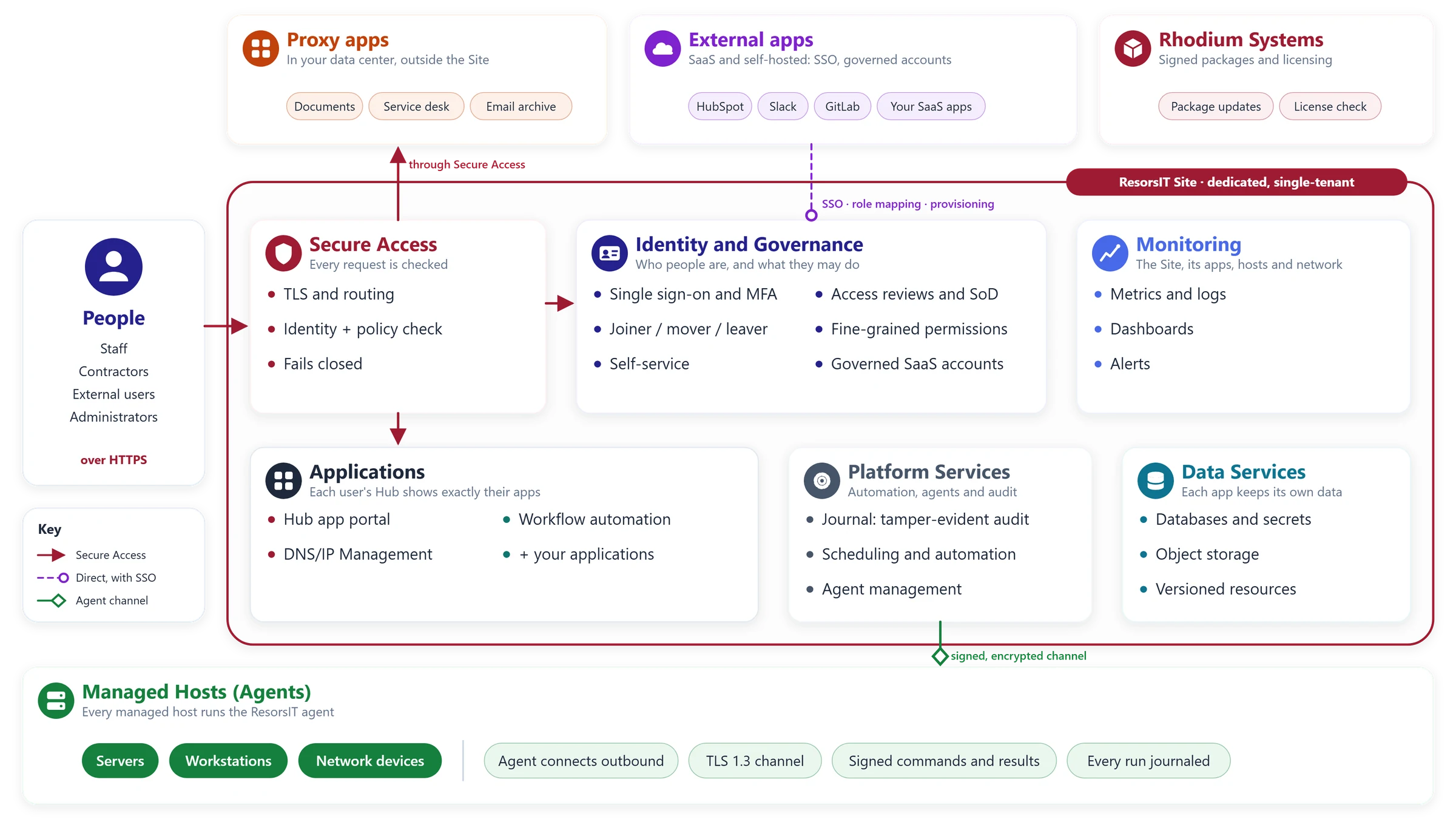
Security tooling in a small organization tends to arrive as separate products, each with its own console, its own accounts and its own idea of what happened. When something goes wrong, the first hour goes to working out which tool saw it. ResorsIT brings the pieces under one platform, so protection, detection and the record of what happened share the same identity, the same logs and the same audit trail.
Endpoints and the Network
Wazuh and Suricata are optional integrations that a Site adds when it wants them. Wazuh covers the endpoints: it monitors critical files for unauthorized changes, analyzes system logs for suspicious activity, scans for known vulnerabilities and assesses configuration against security baselines. Suricata covers the network, inspecting traffic with signature and behavioral detection, alerting on what it finds and, when run inline, blocking it. Findings from both land in OpenSearch with the rest of the Site’s logs, where the Monitoring dashboards and alerts can reach them. The Wazuh and Suricata pages go deeper into each.
Secrets in a Vault
Passwords that belong to systems rather than people, such as database credentials, API keys and tokens, certificates and encryption keys, live in OpenBAO. Access to each secret is governed by policy and every access is audited. Dynamic secrets give services temporary credentials that expire on their own, and each package declares the secrets it needs so the installer can create what is missing.
A Record That Holds Up
The Journal is the Site’s tamper-evident audit trail: who did what, to which resource, and when. Each entry is linked by hash to several earlier ones, three recent and seven chosen at random, so altering one entry breaks a web of links rather than a single chain. The Site’s Journal is checked against Rhodium’s master Journal as part of the license process, which is where tampering would be caught.
Trusted Software and Commands
Everything installed on a Site arrives as a package signed with Ed25519 and verified before it installs. Commands sent to managed hosts are signed for that host and that moment, run in an isolated working directory with a time limit, and return a result signed by the host, and each run is recorded in the Journal.