Most IT software only lets you adjust settings – you can’t change the
functionality to meet your specialized needs. So you patch around the gaps, pay
for custom development, or just live with tools that don’t quite fit how you
work. Meanwhile your data ends up scattered across a dozen SaaS subscriptions,
each with its own login, its own admin console, and its own bill – and none of
them agree about what a user or a device even is.
We give you an IT operations platform with a library of applications you can
change to meet your unique business requirements, so you reduce SaaS spend, keep
your data under your control, and get an IT environment shaped around how you
actually run your business. In-house applications for DNS, IP address
management, and software provisioning, combined with a curated set of proven
open-source applications for the rest of the IT stack, all share one login, one
user directory, and one resource model. It runs as containerized microservices on
Kubernetes, cloud-hosted or on your own infrastructure. The platform is nearing
release, with general availability expected in Q4 2026.
Applications You Can Actually Change
These are real, individually-maintained open-source applications running behind
our security fence – not a closed suite you can only configure. You or your
team can extend any of them to fit exactly how your business runs – including
with your own AI coding tools, the same way you’d use them on any other
project. When you do, ResorsIT captures that enhancement as its own versioned
object, not a fork of the application’s source: the base application keeps
taking upstream updates normally, and your customization sits alongside it
instead of becoming a patched copy you maintain forever. That’s durable
Intellectual Property (IP) – your enhancements are yours to keep, on every
application, without the maintenance trap that normally comes with modifying
open source on your own.
Built on Change-Management Discipline
Rhodium Systems’ founders spent decades building change management and version
control software for industrial automation, where an untracked change can stop a
production line. That discipline shaped our first product, ResorsIT DNS/IP
Management, available today as a SaaS – and it’s why your changes on the
platform, to DNS or to any application, are never a leap of faith: audit trails,
change history, and the ability to undo or roll back run through everything. For
DNS, the platform goes beyond the SaaS product’s audit-log undo and adds full
Git-based version control, so a domain’s records can be rolled back to any point
in their history.
No rip-and-replace. Every application below is one you likely already
recognize – we wrap it, secure it, and connect it to one identity, so you keep
what you know and gain what was missing: the ability to shape it around your
business, without losing your data or your control over it.
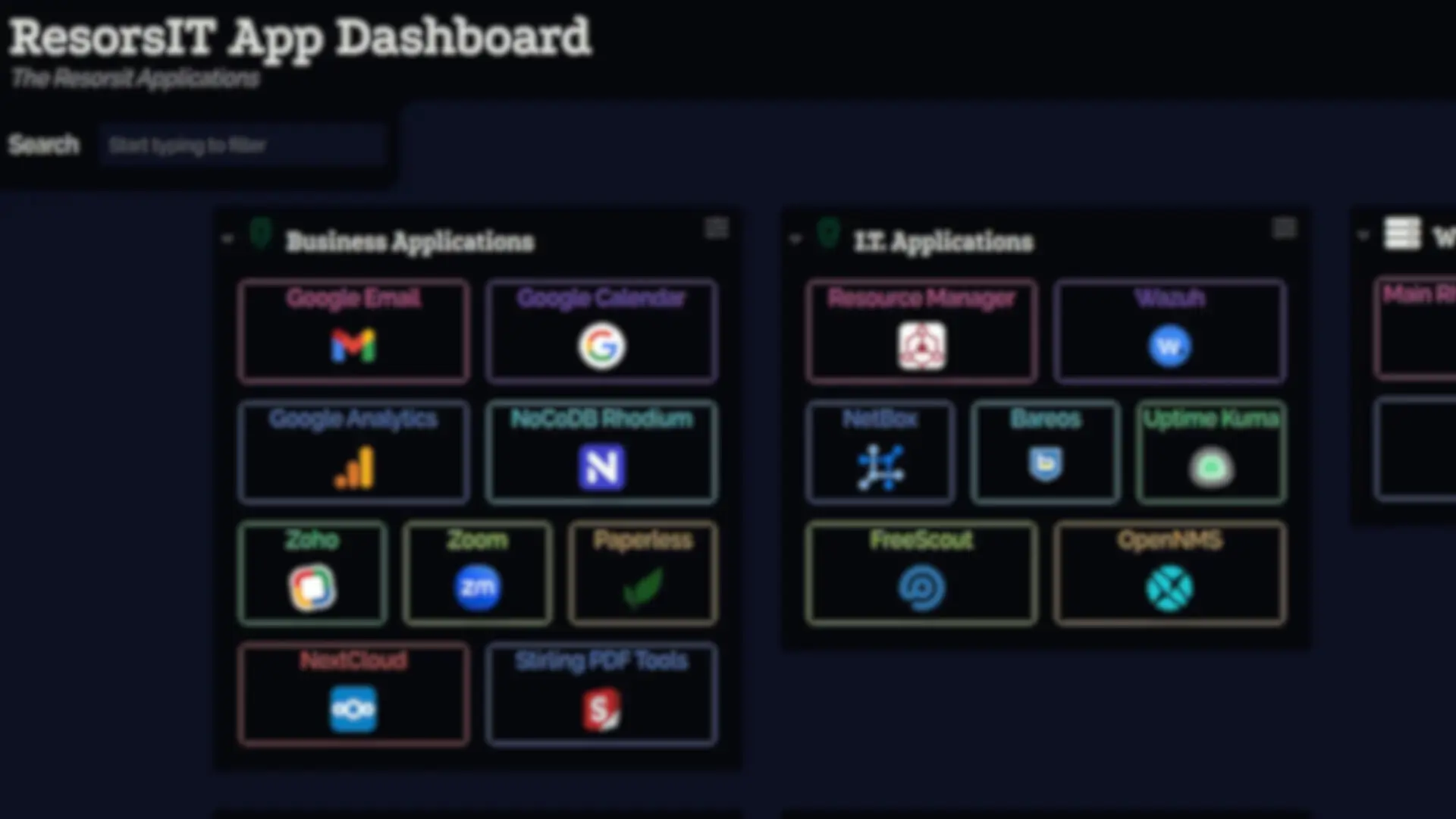
DNS Configuration and IP Address Management (IPAM) are standard, alongside software
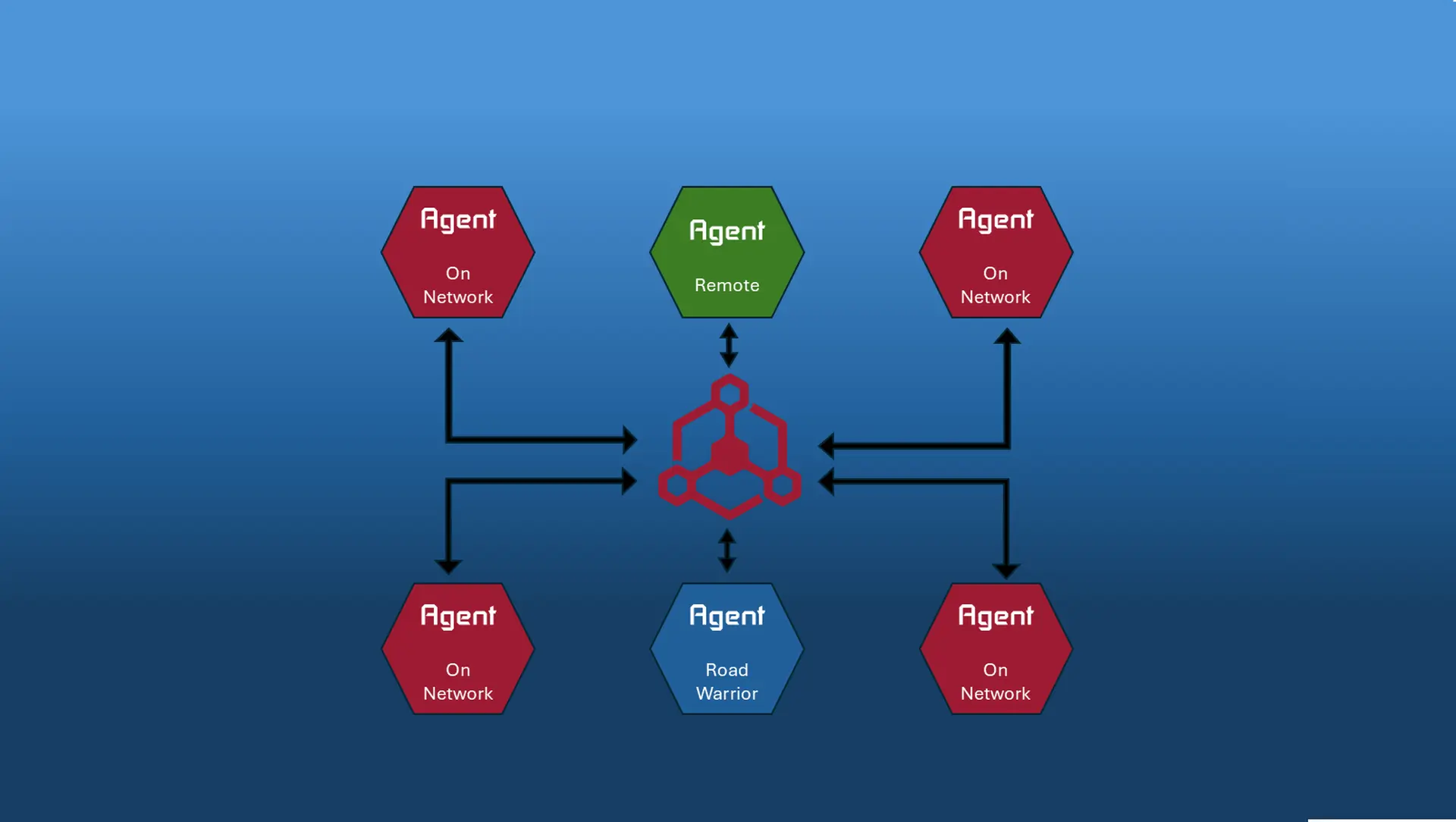
provisioning and user/role management built on our own resource model and agent
framework. From there, the platform integrates open-source applications that cover
what IT departments actually need: single sign-on and multi-factor authentication
through Authentik, identity governance, network modelling with NetBox, availability
monitoring, help-desk ticketing, endpoint protection with Wazuh, intrusion
detection, document management, and workflow automation.
The integration work is the product: SSO wiring, shared user and asset data,
certificate and ingress management, and upgrades. You get the cost savings and
flexibility of open-source without assembling it yourself. And because these
applications are open-source, they can be modified, including with AI assistance,
to fit your business process instead of the other way around.
Both products manage DNS and IP address space; the platform wraps that core in a
much broader operations environment.
|
DNS/IP Management (SaaS) |
ResorsIT Platform |
| Availability |
Available today |
Nearing release; general availability expected in Q4 2026 |
| Deployment |
Multi-tenant SaaS; sign up and go |
Your own dedicated environment, cloud-hosted or on-prem, built on Kubernetes |
| DNS and IPAM |
Audit log with prior values, few-clicks undo, health checks, multi-provider dashboard |
Everything in the SaaS, plus Git-based version control with rollback to any point in history |
| Beyond DNS |
Not included |
Provisioning, SSO and identity management, monitoring, ticketing, endpoint protection, document management, workflow automation, and more |
| Pricing |
Per-company plans; see pricing |
Includes DNS/IP Management at no additional cost; announced at general availability |
Already Using DNS/IP Management?
Moving up is straightforward. Your domains, records, change history, and IPAM data
migrate to the platform. Because the platform runs as your own dedicated Kubernetes
environment rather than a shared multi-tenant service, you’ll receive a new login.
Your DNS/IP Management subscription is folded in; the capability is included in the
platform at no additional cost.
We are engaging our first early-access participants now, ahead of general
availability. If you want to be among the first and help shape where the product
goes, contact us.